
VIP Server
Central database, watchlist lifecycle, policies, notifications, image registry, APIs, dashboard data, and audit history.
ACCIP / VIP Platform
ACCIP connects VIP Server, VIP Sector, ACCIP Gateway, Dashboard, Watchlist, Policy Controller, Image/Evidence Registry, communications, registration, and lead workflows into one governed product model.
Central database, watchlist lifecycle, policies, notifications, image registry, APIs, dashboard data, and audit history.
Edge/local AI execution, authorized template mirror, matching, hit spool, policy-aware evidence handling, and synchronization.
Camera discovery, stream connectivity, source normalization, Gateway pairing, and customer-site camera onboarding.
Dashboard, watchlist, incident, lead management, image gallery, facial match analysis, Policy Controller, and administration workflows.
ACCIP brings deep control for power users, but customer-ready defaults allow teams to connect cameras and operate immediately without modifying a thing.
Operational Landing Point
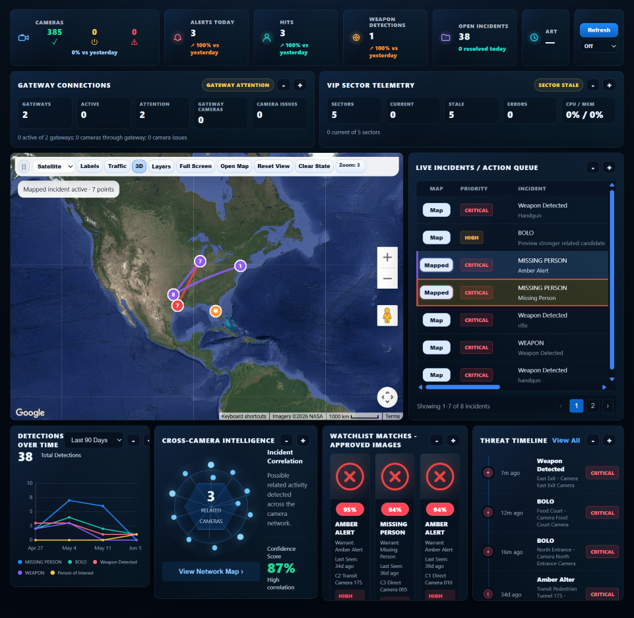
ACCIP is not a passive report. It connects KPIs, maps, action queues, detections, matches, sectors, watchlists, and incidents into one command-center view while respecting scope and policy boundaries.
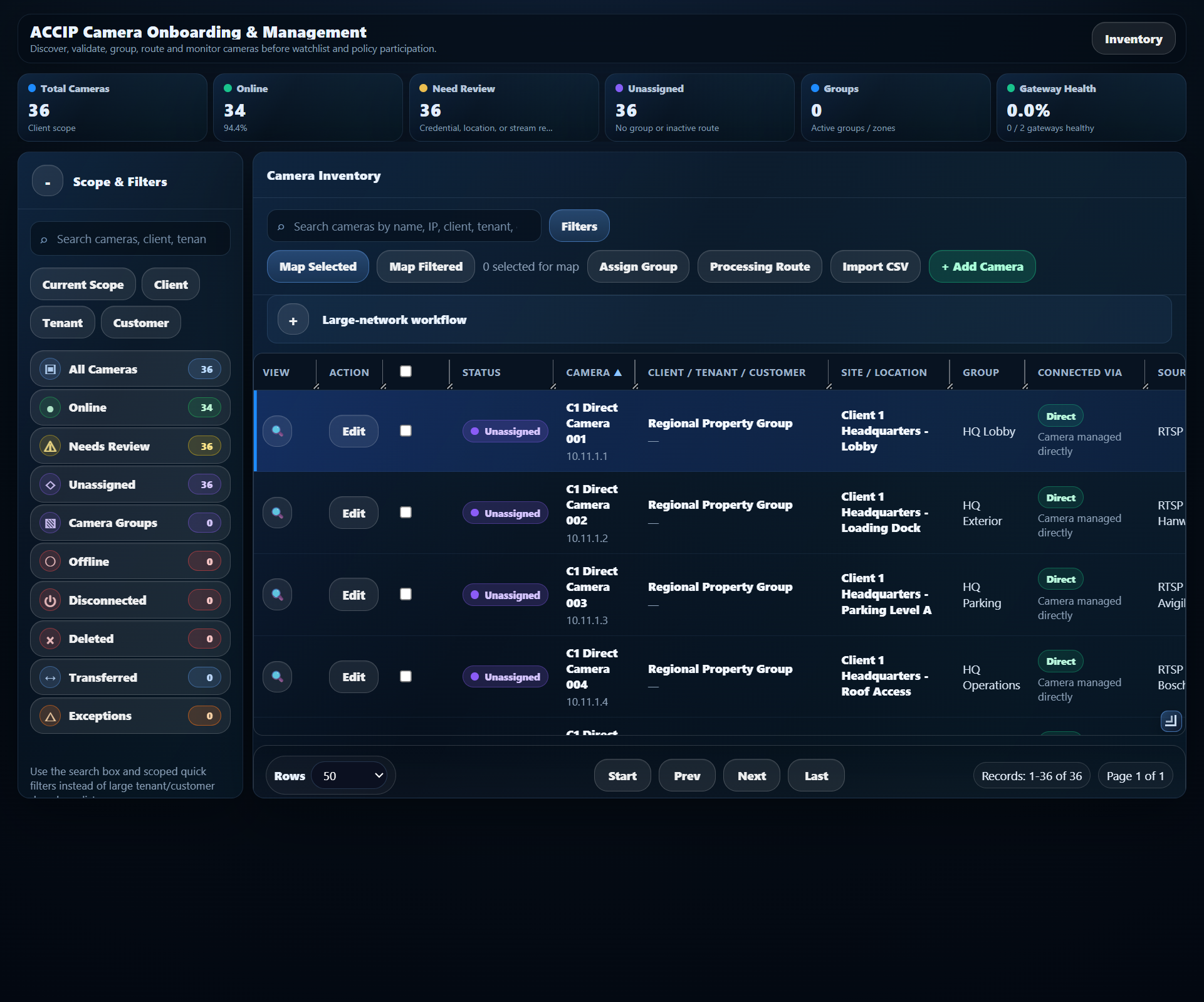
Camera Onboarding & Management
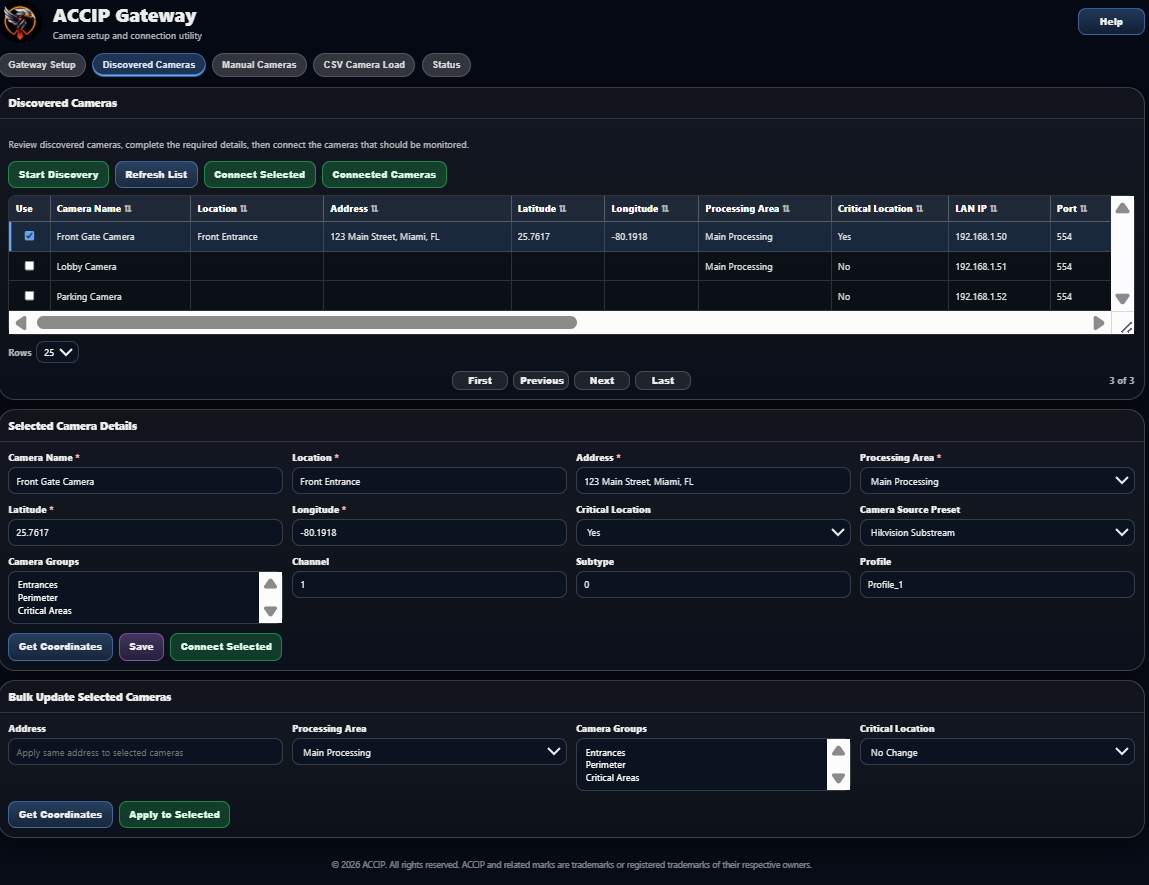
The camera itself does not become a different product object. What changes is the connection path, security posture, and onboarding method: ACCIP can reach an approved open-connect Internet endpoint directly, or the installed ACCIP Gateway can broker access from inside the customer network.
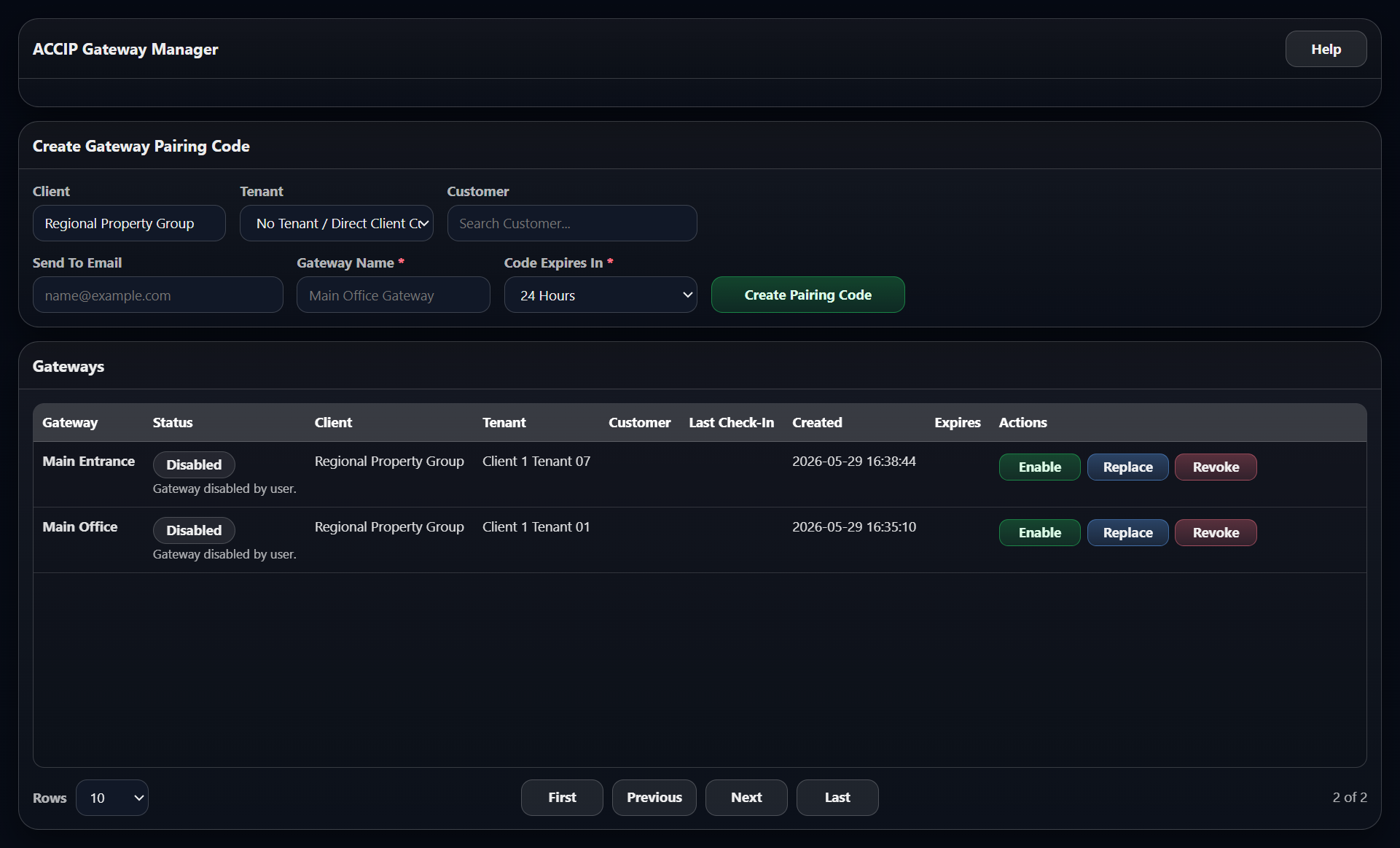
ACCIP reaches an approved external endpoint directly, such as a whitelisted RTSP/HTTP/HTTPS stream, ONVIF endpoint, cloud camera API, or exposed NVR/VMS stream. This is efficient when the endpoint is already safely reachable, but it depends on customer firewall, NAT, VPN, whitelist, credential, and security-policy controls.
The camera stays private on the customer network. The local ACCIP Gateway connects to the camera inside the LAN and opens a secure outbound path to ACCIP / VIP Sector. This is the stronger default posture for private networks, locked-down enterprise sites, and larger multi-camera deployments.
Product Surfaces
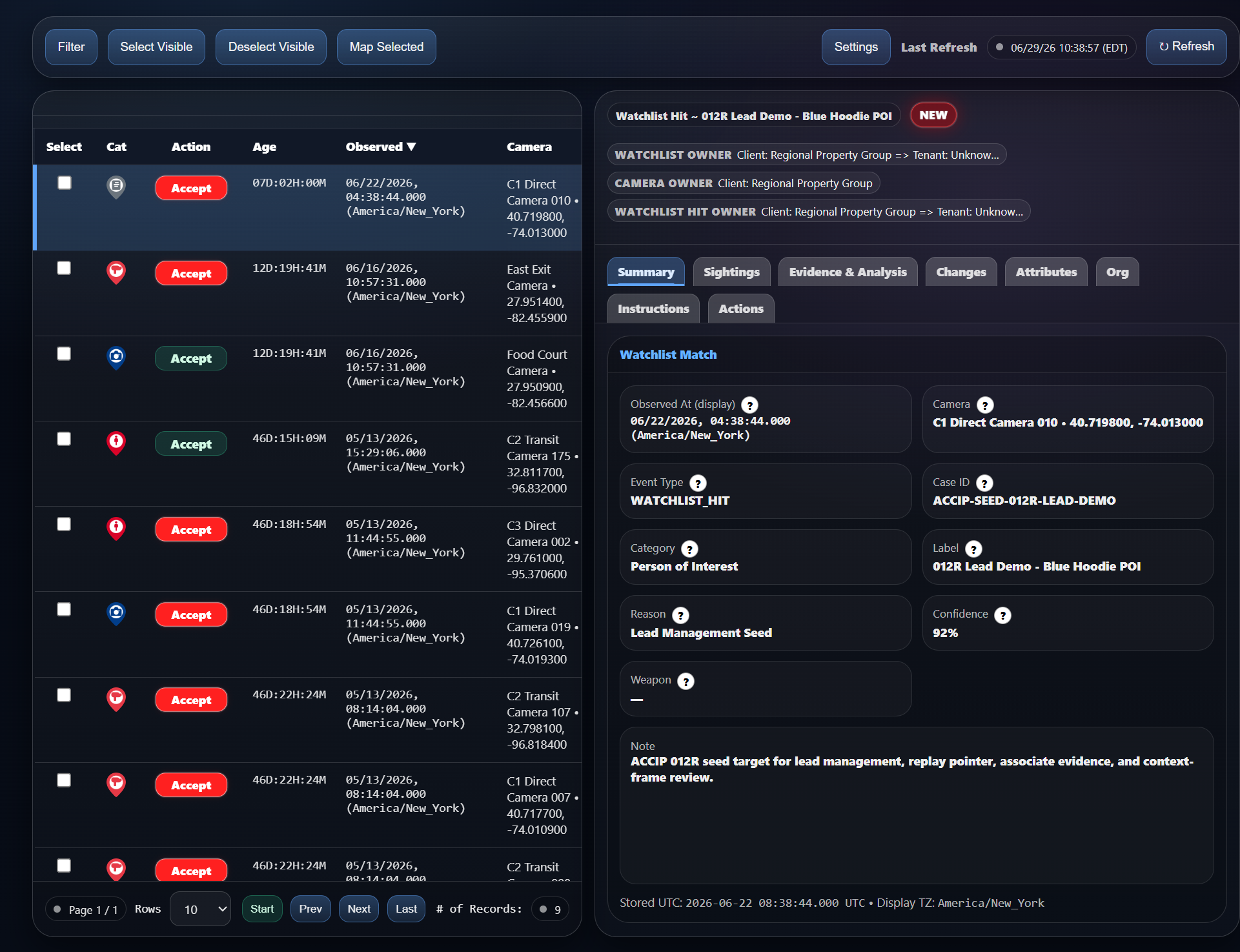
Manual enrollment, generator-created targets, multiple templates, categories, labels, policies, history, evidence, and actions.
Reusable Policy Profiles govern matching, image save rules, Override Behavior, Retention Time-frame, routing, and camera coverage.
Signals that require follow-up move through triage, investigation, escalation, closure, dismissal, and reopening.
Scenario-based images, crops, replay pointers, review decisions, export actions, and retention state remain auditable.
Deployment Path